


Pears Cumbria medicine interview at a glance
| Area | Published information |
|---|---|
| Course | Four-year graduate-entry MBBS, UCAS A102. |
| Format | Multiple mini interviews. |
| Stations and timing | A station count and individual station length were not verified on the reviewed official pages. |
| Delivery | In person at the school’s campus in Carlisle. |
| Interview dates | A current interview window was not verified. |
| Assessment areas | Commitment to medicine, regional contribution, teamwork and leadership, ethics, empathy, resilience and adaptability. |
Those published assessment areas are a better preparation framework than speculative station lists. They tell you what to practise without revealing confidential tasks. Build evidence for each area, then rehearse applying it to unfamiliar questions. Your invitation should settle practical details such as arrival, documents and any confirmed circuit timing.
How Pears Cumbria shortlists applicants
Pears Cumbria is a graduate-entry route for home students. Its current course information specifies a relevant biosciences or allied healthcare degree at the required standard, while the school’s programme page states that the four-year route has no GCSE or A-level requirements. Do not confuse this with an undergraduate route that accepts applicants directly from school.
The school accepts UCAT or GAMSAT. Its programme information says UCAT must be taken in the same year as the UCAS application and GAMSAT within the stated two-year period before submission. Imperial’s published admissions explanation says eligible applicants are selected for interview using ranked test scores, with thresholds calculated for the cycle.
The programme page publishes thresholds for 2026 entry, but a historical threshold is not a guaranteed requirement for the following year. This article deliberately avoids turning those figures into a future target. Check the current scoring policy, including any contextual uplift, before deciding whether a particular result is competitive.
The application page says applicants may qualify for a score uplift as part of widening access. It also explains that personal-statement information can inform discussion, including consideration of local links and interest in the region. The reviewed pages did not establish a universal SJT-band exclusion or a numerical personal-statement weighting, so neither should be inferred from Imperial’s other medicine routes.
A new school with a specific partnership and purpose
Pears Cumbria is a collaboration between Imperial College London and the University of Cumbria. The programme is delivered in Cumbria and the degree is awarded by Imperial. The current programme page advertises a September 2027 start, so it should not be described as merely a hypothetical proposal. Equally, avoid inventing accreditation milestones or treating every Imperial medicine admissions rule as interchangeable.
The published course combines early clinical exposure with research-informed medical sciences, multi-professional learning and a community-based project linked to prevention and healthcare delivery. Its professional development support includes a tutor with clinical experience in Cumbria. These features give you concrete material for explaining why this course, rather than simply why a graduate-entry degree.
The regional question needs care. Discuss how geography, transport, continuity and local service organisation might affect patients without reducing Cumbria to scenery or assuming all residents have the same experience. A strong answer starts with curiosity about communities and existing services. It does not present an incoming student as arriving to solve problems that local professionals have somehow overlooked.
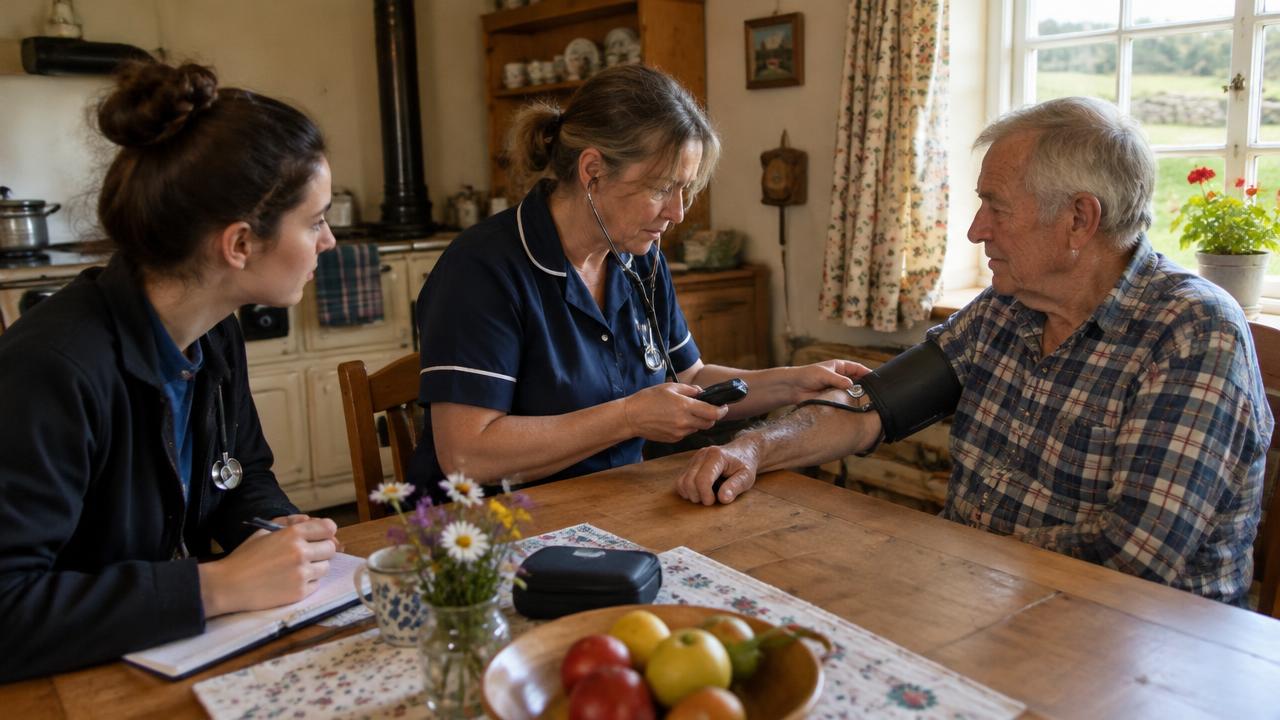
Pears Cumbria medicine interview questions to practise
These are original practice questions aligned with the school’s published assessment areas, not leaked stations. Try answering the regional questions without relying on a personal connection. The school explicitly states that applicants without local links can demonstrate understanding of, and interest in improving, health outcomes for people in Cumbria.
- 1Why do you want to study medicine in Cumbria, and how have you tested your understanding of the region?
- 2What could you contribute to a developing medical school without assuming that your own approach is always best?
- 3A patient’s circumstances make repeated travel to appointments difficult. What would you want to understand before suggesting changes?
- 4Describe a time you adapted when a plan stopped working. How did you decide what to change?
- 5What have interactions with service-users taught you about empathy that observation alone might not reveal?
- 6How would you respond if your team preferred an option that you believed created an avoidable risk?
- 7What ethical questions might arise when designing a community project intended to improve health?
- 8How has your previous degree prepared you for medicine, and where will you need further development?
Prepare around Pears Cumbria’s six published areas
Turn regional interest into specific reasoning
Read about the course and a small number of credible local health sources, then write down what you still do not know. Practise explaining one possible access challenge and several responses, including their limitations. For instance, remote contact may reduce travel for some patients but can create difficulties for others. Balanced reasoning is stronger than proposing a universal technological solution.
Use examples that show adaptability and empathy
Choose an experience where your first interpretation was incomplete. Explain what you noticed, what the other person told you and how your behaviour changed. This can support discussion of empathy, resilience or teamwork depending on the question. Keep the emphasis on your actions and learning rather than disclosing another person’s private story in unnecessary detail.
For leadership, include listening and follow-through rather than equating leadership with taking control. For ethics, identify the people affected, clarify uncertainty and suggest a proportionate next step. For commitment to medicine, connect your previous study and experience to a realistic understanding of responsibility. These habits work across an MMI even when the exact number and duration of stations are unpublished.
Arrange a mixed practice circuit and ask your partner to test regional motivation alongside ordinary professional dilemmas. This prevents an overprepared answer about Cumbria from masking weaker communication or ethical reasoning. Use a rehearsal timer for discipline, but label it as your practice setting until the school supplies confirmed station timings.
Finally, plan the in-person visit carefully. Check the campus location, travel options, arrival instructions and adjustments process. If a circumstance could affect your interview performance, contact admissions promptly rather than waiting until afterwards. The programme information stresses early notification of mitigating circumstances and warns against relying on late claims without supporting explanation.
Frequently asked questions
Is Pears Cumbria medicine an Imperial degree?
Yes. The programme page states that the degree is awarded by Imperial College London and delivered in Cumbria in collaboration with the University of Cumbria.
Are Pears Cumbria medicine interviews in person?
Yes. The school’s application page says its MMIs are conducted in person at its Carlisle campus.
Do I need to be from Cumbria to apply?
No. The school says applicants without local links can demonstrate understanding of and interest in improving health outcomes for the people of Cumbria.
Does Pears Cumbria require GCSEs or A-levels?
Its graduate-entry programme page states that the four-year route has no GCSE or A-level requirements. Applicants must still meet the degree, admissions-test and other eligibility requirements.
What does Pears Cumbria assess at interview?
The published areas are commitment to medicine and understanding the doctor’s role, potential contribution to the school and region, teamwork and leadership, ethics, empathy, and resilience and adaptability.