
Surrey medicine interview at a glance
| Area | Published information |
|---|---|
| Course | Four-year graduate-entry BMBS, UCAS A101. |
| Format | Multiple mini interview, with independent assessment at each station. |
| Timing | The live course page describes a cycle lasting under one hour. |
| Stations | A station count and individual station length were not verified. |
| Delivery | The live page describes virtual interview events. |
| Interview dates | Dates are described as to be confirmed. |
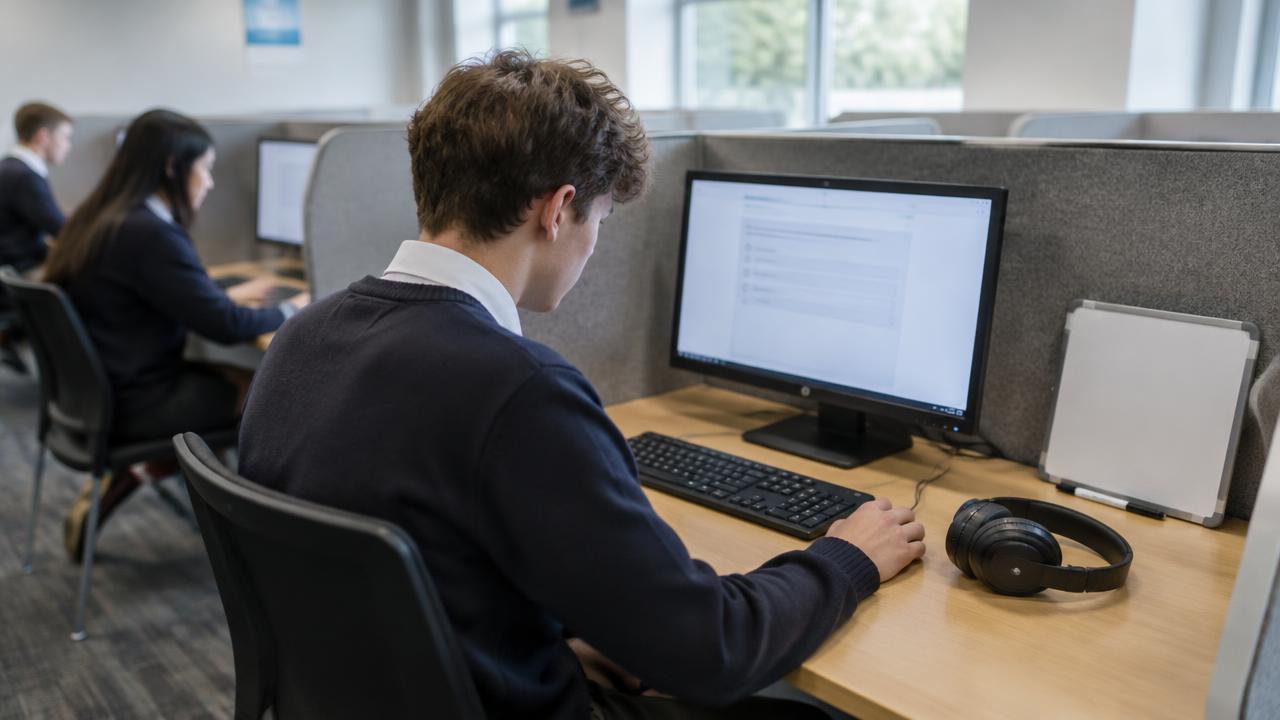
An online interview is still a conversation, not a recorded speech delivered towards a camera. You need to notice questions, respond to clarification and communicate naturally through a screen. Prepare the technical environment early so that your final practice sessions test your judgement and communication rather than whether your microphone works.
How Surrey shortlists graduate-entry applicants
Surrey’s published 2026 admissions policy specifies a minimum 2:1 degree in any subject, and the current course page retains a 2:1 typical offer. The live selection process starts with academic screening, including achieved or predicted results. Incomplete applications and applications below the minimum requirements may be rejected before aptitude-test consideration.
The current course page accepts GAMSAT and also considers UCAT from applicants whose degree is in Biochemistry, Biology, Biomedical Science, Chemistry or Natural Sciences. This subject restriction matters: do not assume that a graduate in any discipline can substitute UCAT for GAMSAT. Check the exact accepted degree title and test requirements against your own entry-year policy.
At the test stage, Surrey describes applicants being placed into invite-to-interview, waiting-list or reject categories. The reviewed page does not give a fixed numerical cut-off, an SJT-band exclusion or a published personal-statement weighting. The 2026 policy also lists GCSE or equivalent Maths and English requirements; because its grade wording combines different grading conventions, check the accepted equivalence directly rather than converting it yourself.
Widening participation support should not be confused with an automatic interview adjustment. Surrey publishes scholarship information, including named support for eligible home students, but funding eligibility and admissions ranking are separate questions. Read both sets of criteria and obtain clarification if you are unsure whether a provision changes selection or only financial support after selection.
What makes Surrey’s graduate-entry course different?
Surrey emphasises a hands-on curriculum, communication, the psychological and social dimensions of care, simulation and structured NHS placements. Its course information also highlights anatomical teaching facilities and the application of technology. A useful interview answer connects one of these features to an actual learning need rather than reciting the prospectus.
For example, a graduate accustomed to independent essay writing might explain how simulation would help them turn knowledge into observable action and accept immediate feedback. A science graduate could discuss the challenge of explaining complex ideas without jargon. An experienced healthcare worker should show respect for existing skills while recognising that medical training brings different responsibilities and boundaries.
The university describes Surrey as a new medical school under GMC review, with Exeter as its contingency school. That is not the same as saying the programme has already completed every stage of new-school approval. If asked about joining a developing school, give a balanced answer about adaptability, feedback and checking official information rather than making assumptions about accreditation.

Surrey medicine interview questions to practise
These are original preparation questions based on the graduate-entry course and published selection information, not disclosed Surrey stations. Use them to test whether your answers demonstrate considered change, academic readiness and safe communication. A previous degree is evidence of experience, not proof that you have already mastered those qualities.
- 1Why is medicine the right next step after your degree, rather than a route that builds more directly on your current qualification?
- 2Which habit from your previous studies will help you on an accelerated course, and which habit will you need to change?
- 3Describe a time you explained a complex idea to someone with little background knowledge. How did you check understanding?
- 4What can simulation teach effectively, and what still needs to be learned from patients and clinical teams?
- 5A peer is struggling but asks you not to tell anyone. How would you balance support, confidentiality and safety?
- 6How would you judge whether a new healthcare technology genuinely improves patient care?
- 7What would you contribute to a developing medical school, and how would you respond when a process needs improvement?
- 8During an online conversation, someone becomes upset and stops speaking. How would you respond without rushing to fill the silence?
A Surrey preparation plan for a virtual MMI
Make the career transition coherent
Prepare a concise account of your route so far: what you studied, what brought medicine into focus, how you tested the decision and what you understand better now. Avoid apologising for a non-medical degree or presenting a previous career as wasted time. Equally, do not imply that medicine is simply a more prestigious version of work you already do.
Practise on the equipment you will use
Set the camera at eye level and check that your speech remains clear at a comfortable volume. Rehearse with someone who can interrupt and ask follow-ups. Look towards the screen naturally when listening, and avoid reading notes beside the camera. If the connection briefly fails, practise calmly acknowledging the problem and asking for the last part of the question to be repeated.
Use a short sequence of varied stations to build stamina for a cycle under an hour, but do not invent an official station structure. After a mock, assess whether you answered the actual question, explained your reasoning and recognised your limits. Those checks are more useful than counting how many ethical principles or technical terms you managed to mention.
Finally, prepare an honest account of managing accelerated study. Explain how you prioritise, seek help and respond to feedback using evidence from your degree or work. You do not need to promise perfect resilience. Showing that you recognise pressure early and have realistic support strategies is more credible than claiming that you always work best under stress.
Frequently asked questions
Is Surrey medicine graduate entry?
Yes. Surrey’s BMBS is a four-year graduate-entry programme, with a typical minimum requirement of a 2:1 degree or equivalent.
Is the Surrey medicine interview online?
The live course page, now describing 2027 entry, specifies virtual MMI events. Check your invitation for the arrangements applying to you.
How long is Surrey’s medicine interview?
The current course page describes an MMI cycle lasting under one hour. A station count and individual station timings were not verified.
Does Surrey accept UCAT for graduate-entry medicine?
The current page considers UCAT for degrees in Biochemistry, Biology, Biomedical Science, Chemistry or Natural Sciences. GAMSAT is the other published route; check the policy for your year.
Is Surrey medical school fully through GMC approval?
Surrey describes itself as a new school under GMC review and identifies Exeter as its contingency school. Do not confuse that status with completed final-stage approval.