
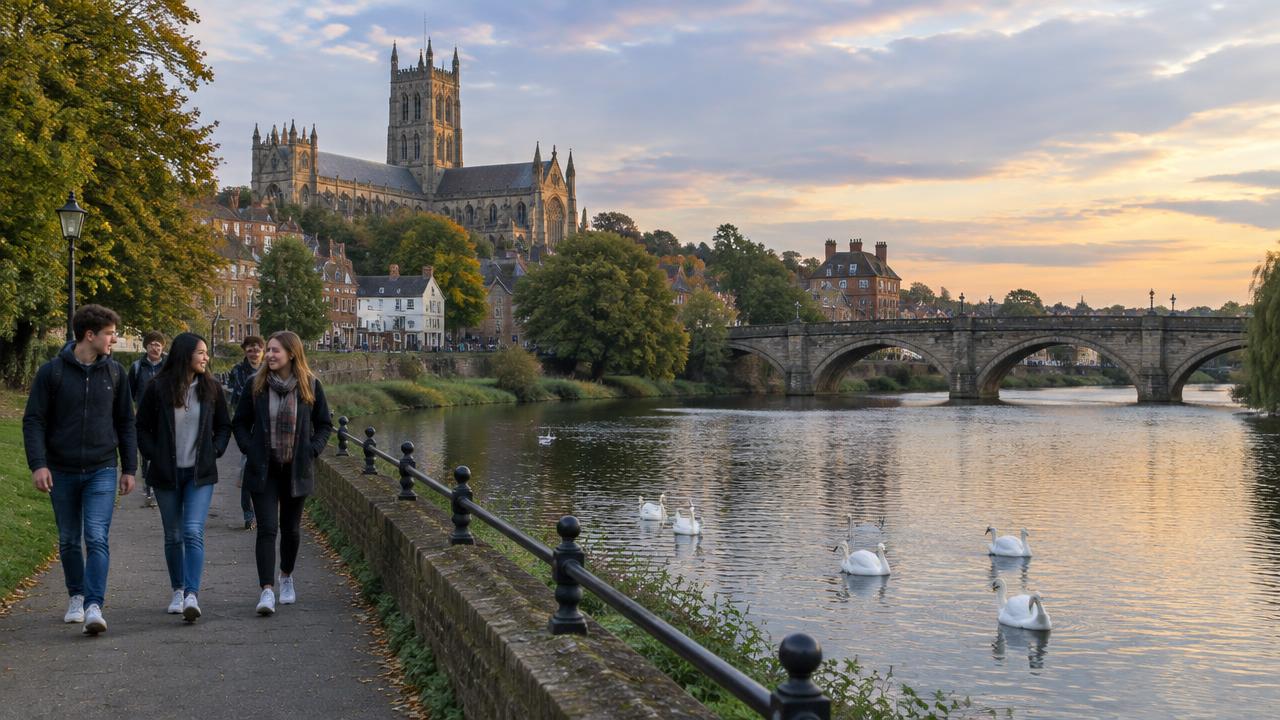

Three Counties medicine interview at a glance
| Area | Published information |
|---|---|
| Institution and route | Three Counties Medical School at the University of Worcester; four-year graduate-entry MBChB, A101. |
| Interview format | The current course information specifies two panel interviews. |
| Other assessment | All shortlisted applicants must complete the online Casper situational judgement test. |
| Interview duration | Panel lengths were not verified in the current official material reviewed. |
| Interview delivery | Online or in-person delivery for the panels was not verified. Casper is online. |
| When | A current official panel-interview calendar was not verified. Follow the university’s invitation. |
How Worcester shortlists graduate-entry applicants
Worcester accepts applications from graduates in any subject. Its published requirements include a first or upper-second-class degree, or a lower-second-class degree with a master’s or doctoral qualification. The FAQs summarise the route as requiring a 2:1, with the additional postgraduate qualification alternative explained elsewhere in the course information. Check the full requirements if your qualification profile is less straightforward.
The current course and FAQs accept UCAT, GAMSAT or MCAT as aptitude-test options. The FAQs say there is no hard cut-off because the required level depends on the applicant cohort. Do not treat an older suggested score as a guaranteed interview threshold. UCAT validity differs from GAMSAT validity, and applicants should check the accepted test dates directly rather than assume all previous results remain usable.
GCSEs are an eligibility consideration rather than a published extensive GCSE-points ranking in the material reviewed. The course requires English and Mathematics at grade C/4 or above, with two science GCSEs also required for applicants whose degrees are not in science. A numerical personal-statement weighting and a separate UCAT SJT-band exclusion were not verified. Casper is its own required assessment and should not be confused with the SJT section of UCAT.
Worcester publishes preferences within its holistic assessment, including substantial geographical links to the Three Counties, being a Worcester graduate, first-generation university attendance, specified participation-area circumstances, NHS work or significant NHS knowledge, and refugee status. These are preferences, not a rule that only local applicants can apply. The university explicitly says applicants can apply wherever they live, and its current FAQs welcome Home and international applications.
What makes Three Counties different?
The course emphasises community-based learning and problem-based learning in small groups facilitated by practising doctors. Its published description includes meeting patients in general practice from the first weeks and learning with primary-care teams and other healthcare professionals. Your motivation answer should therefore show interest in how people experience illness across settings, not just in dramatic hospital interventions.
For a graduate applicant, the central question is often not whether your previous degree was relevant enough, but whether you understand the change you are making. Identify transferable skills without claiming they remove the need to start again as a learner. Research experience might help you evaluate evidence; employment might develop responsibility; caring might improve listening. None automatically confers clinical competence or proves that medicine is the right career.
Three Counties refers to Worcestershire, Herefordshire and Gloucestershire. Use the regional identity to explore continuity, access and community services without stereotyping the population. A useful preparation exercise follows a hypothetical patient from a GP consultation through investigation and hospital care, then back into the community. Ask what information, communication and support would be needed at each transition.

Three Counties medicine interview questions to practise
These original questions are tailored to Worcester’s graduate-entry and community-learning context. They are not reported panel questions or Casper scenarios.
- 1Why is medicine the right next step after your previous degree or career?
- 2Which transferable skill will help you, and where will you need to recognise your limitations?
- 3What attracts you to a community-based medical course at Worcester?
- 4How would you contribute to a problem-based learning group when others know more science than you?
- 5A patient struggles to attend several appointments in different locations. What would you explore?
- 6Tell us about a sustained responsibility that tested your organisation and resilience.
- 7How would you respond if a colleague concealed a mistake because they feared the consequences?
- 8What have you done to test your understanding of NHS work rather than relying on an idealised view?
Prepare for panels and Casper as different tasks
For the panels, practise sustained discussion with two people. Give a focused first answer and leave room for follow-ups. Your preparation partner should probe why you changed direction, what you learned from experience and how you would cope with returning to intensive study. Avoid a defensive account of your previous career or degree: explain what it contributed and why medicine now fits your considered goals.
For Casper, use Worcester’s linked provider guidance and practise expressing a proportionate response under time pressure. The university describes video and typed responses to situational scenarios. Work on identifying missing facts, considering different perspectives and choosing an appropriate next step. Do not substitute elaborate moral language for a practical answer, and do not assume that the panel interview is simply a spoken repetition of the test.
Finally, make your account of graduate-entry readiness realistic. Consider how you organise learning, seek help and respond to feedback, without claiming you have solved every practical challenge. Review the current course and admissions pages before booking tests, because Worcester’s accepted aptitude-test options have expanded. Where panel dates or lengths are not published, wait for official instructions rather than filling the gap with a confident but unsupported timetable.
Frequently asked questions
Is Three Counties Medical School part of Worcester?
Yes. Three Counties Medical School is the University of Worcester’s medical school and offers the four-year graduate-entry MBChB.
Does Worcester medicine use MMIs or panels?
The current course information specifies two panel interviews. All shortlisted applicants must also complete Casper.
Which admissions tests does Worcester medicine accept?
The current course information and FAQs list UCAT, GAMSAT and MCAT. Check accepted sittings and validity before applying.
Can non-science graduates apply to Three Counties?
Yes. Graduates of any subject can apply if they meet the full requirements. Non-science graduates also need the specified science GCSEs.
Do I need to live in the Three Counties to apply?
No. Worcester says applicants can apply wherever they live, although substantial geographical links are among its published holistic-assessment preferences.